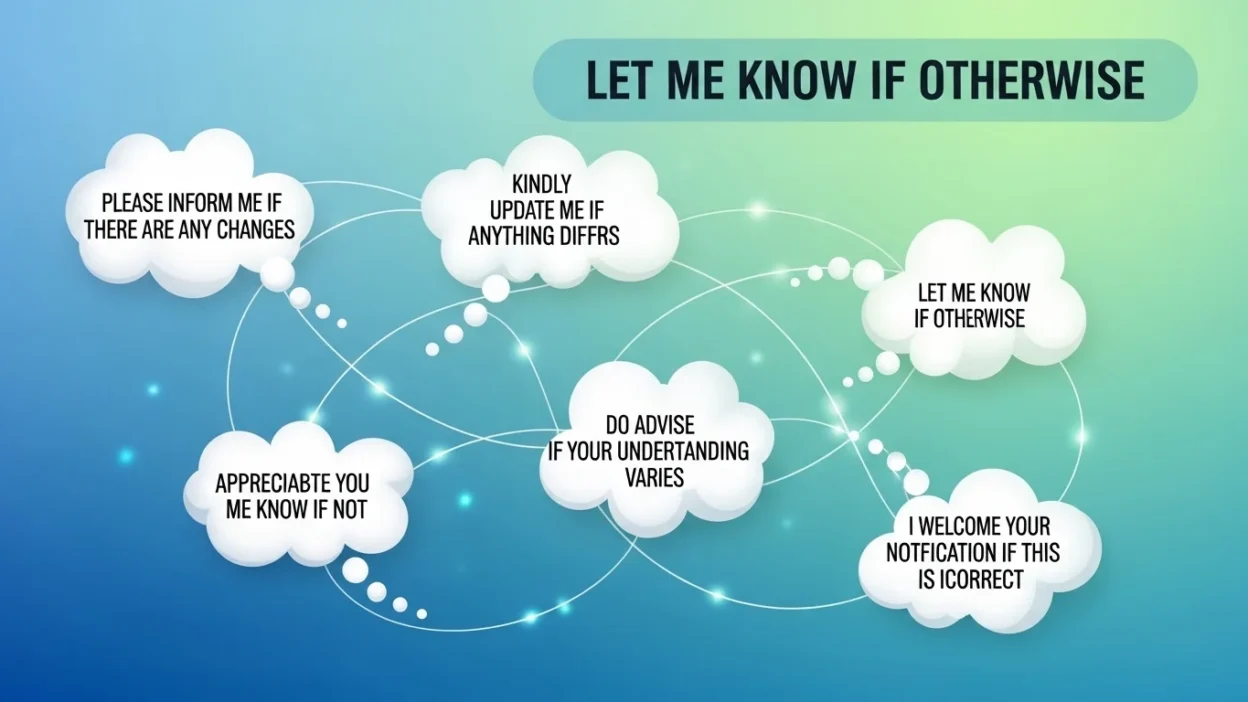
The phrase “let me know if otherwise” is often used in emails and conversations to confirm something like a plan, schedule, or assumption.
While it’s clear, it can sometimes sound a bit formal or repetitive. That’s why learning other ways to say “let me know if otherwise” can help you sound more natural, professional, and engaging.
Whether you’re writing emails, chatting with colleagues, or communicating casually, using the right variation can improve clarity and tone.
In this guide, you’ll discover polite alternatives, casual phrases, and professional rewordings that fit different situations and help you communicate more effectively.
1. Please Let Me Know If Not
Best for: Simple communication
Alternative: Direct phrasing
Examples:
“Please let me know if not.”
“Let me know if this doesn’t work.”
Clear and concise.
2. Let Me Know If That’s Not the Case
Best for: Professional tone
Alternative: Formal
Examples:
“Let me know if that’s not the case.”
“Please inform me if this is incorrect.”
Great for emails.
3. Feel Free to Correct Me
Best for: Open conversations
Alternative: Friendly tone
Examples:
“Feel free to correct me if I’m wrong.”
“Let me know if I misunderstood.”
Encourages feedback.
4. Let Me Know If Anything Changes
Best for: Ongoing situations
Alternative: Update request
Examples:
“Let me know if anything changes.”
“Keep me updated if needed.”
Flexible tone.
5. Please Inform Me If Otherwise
Best for: Formal writing
Alternative: Professional phrase
Examples:
“Please inform me if otherwise.”
“Kindly notify me if different.”
Very formal.
6. Let Me Know If That Doesn’t Work
Best for: Scheduling
Alternative: Casual
Examples:
“Let me know if that doesn’t work.”
“Tell me if it’s not convenient.”
Common in daily use.
7. Let Me Know If I’m Mistaken
Best for: Clarification
Alternative: Humble tone
Examples:
“Let me know if I’m mistaken.”
“Correct me if I’m wrong.”
Polite and respectful.
8. Please Advise If Different
Best for: Professional emails
Alternative: Business tone
Examples:
“Please advise if different.”
“Kindly advise if changes are needed.”
Corporate-friendly.
9. Let Me Know If You See It Differently
Best for: Discussions
Alternative: Open tone
Examples:
“Let me know if you see it differently.”
“Share your thoughts if not.”
Encourages dialogue.
10. Tell Me If That’s Incorrect
Best for: Clear communication
Alternative: Direct tone
Examples:
“Tell me if that’s incorrect.”
“Let me know if this is wrong.”
Simple and effective.
11. Please Let Me Know If That’s Wrong
Best for: Casual emails
Alternative: Friendly tone
Examples:
“Please let me know if that’s wrong.”
“Let me know if I got it wrong.”
Natural phrasing.
12. Let Me Know If You Disagree
Best for: Opinions
Alternative: Open discussion
Examples:
“Let me know if you disagree.”
“I’m open to your feedback.”
Encourages input.
13. Please Confirm If Not
Best for: Confirmation
Alternative: Formal
Examples:
“Please confirm if not.”
“Kindly confirm if this is incorrect.”
Short and professional.
14. Let Me Know If That Needs Changing
Best for: Edits
Alternative: Suggestion
Examples:
“Let me know if that needs changing.”
“Tell me if adjustments are needed.”
Helpful tone.
15. Let Me Know If This Isn’t Right
Best for: Casual use
Alternative: Friendly
Examples:
“Let me know if this isn’t right.”
“Tell me if something’s off.”
Easygoing.
16. Please Notify Me If Otherwise
Best for: Formal tone
Alternative: Business
Examples:
“Please notify me if otherwise.”
“Kindly notify me if incorrect.”
Professional.
17. Let Me Know If You Think Otherwise
Best for: Opinion-based
Alternative: Soft tone
Examples:
“Let me know if you think otherwise.”
“Share your view if different.”
Polite and open.
18. Let Me Know If This Doesn’t Apply
Best for: Clarifying context
Alternative: Situational
Examples:
“Let me know if this doesn’t apply.”
“Tell me if this isn’t relevant.”
Clear and useful.
19. Feel Free to Point It Out
Best for: Friendly tone
Alternative: Casual
Examples:
“Feel free to point it out if I’m wrong.”
“Let me know if I missed something.”
Relaxed and open.
20. Please Let Me Know If There’s an Issue
Best for: Problem-solving
Alternative: Professional
Examples:
“Please let me know if there’s an issue.”
“Inform me if anything’s wrong.”
Helpful.
21. Let Me Know If It Needs Adjustment
Best for: Work tasks
Alternative: Professional
Examples:
“Let me know if it needs adjustment.”
“Tell me if changes are required.”
Work-friendly.
22. Let Me Know If You’d Like Something Different
Best for: Service tone
Alternative: Customer-friendly
Examples:
“Let me know if you’d like something different.”
“I’m happy to adjust if needed.”
Great for service roles.
23. Let Me Know If This Doesn’t Suit You
Best for: Scheduling
Alternative: Polite
Examples:
“Let me know if this doesn’t suit you.”
“Tell me if it’s not convenient.”
Friendly.
24. Let Me Know If That’s Not Right
Best for: Confirmation
Alternative: Casual
Examples:
“Let me know if that’s not right.”
“Tell me if it’s wrong.”
Simple.
25. Please Tell Me If Otherwise
Best for: Direct tone
Alternative: Formal
Examples:
“Please tell me if otherwise.”
“Let me know if different.”
Short and clear.
26. Let Me Know If This Needs Fixing
Best for: Informal tone
Alternative: Friendly
Examples:
“Let me know if this needs fixing.”
“Tell me if I should update it.”
Casual.
27. Let Me Know If You’d Prefer Something Else
Best for: Options
Alternative: Flexible
Examples:
“Let me know if you’d prefer something else.”
“I can adjust if needed.”
Polite.
28. Let Me Know If I Need to Revise This
Best for: Writing tasks
Alternative: Professional
Examples:
“Let me know if I need to revise this.”
“I’m open to changes.”
Constructive.
29. Let Me Know If That Doesn’t Match
Best for: Accuracy
Alternative: Clear
Examples:
“Let me know if that doesn’t match.”
“Tell me if it’s different.”
Precise.
30. Let Me Know If Anything Is Off
Best for: Casual tone
Alternative: Friendly
Examples:
“Let me know if anything is off.”
“Tell me if something seems wrong.”
Simple and natural.
Conclusion
Using other ways to say “let me know if otherwise” helps you communicate more clearly, naturally, and professionally.
Whether you’re writing emails, messaging coworkers, or having casual conversations, the right phrasing can make your message sound more polished and approachable.
By choosing the best alternative based on your tone formal, casual, or friendly you can improve communication and make your interactions more effective and engaging.
FAQs
What does “let me know if otherwise” mean?
It means asking someone to correct you if your assumption or statement is wrong.
Is it a formal phrase?
Yes, it’s often used in professional or business communication.
What’s a simpler alternative?
“Let me know if not” is a simple and clear option.
Can I use casual alternatives?
Yes, phrases like “tell me if that’s wrong” work well in informal settings.
Why use alternatives?
Using different phrases improves clarity and avoids sounding repetitive.

Axel Brady is an American author and independent blogger known for building his own digital publishing platform.
He focuses on writing about motivation, lifestyle design, and online business strategies.
Through his work, he aims to inspire readers to create, grow, and succeed in the digital world.