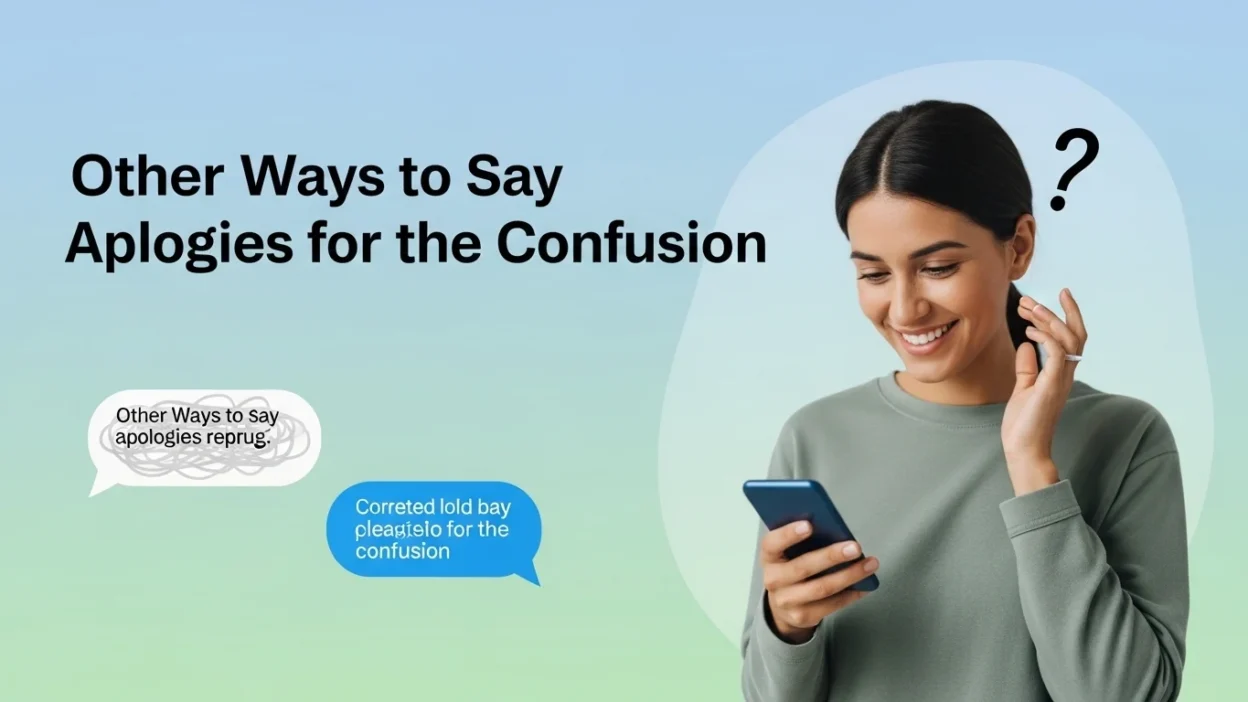
We’ve all been in situations where something we said or shared caused misunderstanding. In those moments, saying “apologies for the confusion” is helpful—but sometimes it can sound repetitive or a bit formal.
That’s why learning other ways to say apologies for the confusion can make your communication feel more natural, thoughtful, and effective.
Whether you’re writing emails, chatting with clients, messaging coworkers, or responding casually, choosing the right words matters. In this guide, you’ll discover polite alternatives, professional phrases, and friendly ways to apologize for confusion—all designed to improve clarity, maintain trust, and keep conversations smooth.
1. Sorry for Any Confusion
Best for: Everyday communication
Alternative: Simple apology
Examples:
“Sorry for any confusion earlier.”
“My apologies for any confusion caused.”
A clear and widely used phrase.
2. I Apologize for the Mix-Up
Best for: Professional tone
Alternative: Formal apology
Examples:
“I apologize for the mix-up in details.”
“Sorry about the mix-up.”
Great for workplace communication.
3. Sorry If That Was Unclear
Best for: Casual tone
Alternative: Friendly apology
Examples:
“Sorry if that was unclear.”
“My message might not have been clear—sorry!”
Keeps it light and honest.
4. Let Me Clarify That
Best for: Correcting confusion
Alternative: Clarification phrase
Examples:
“Let me clarify that for you.”
“I’d like to clear things up.”
Focuses on fixing the issue.
5. Thanks for Your Patience
Best for: Polite tone
Alternative: Appreciative response
Examples:
“Thanks for your patience while I clarify.”
“I appreciate your patience.”
Adds gratitude to the apology.
6. My Bad for the Confusion
Best for: Informal chats
Alternative: Casual apology
Examples:
“My bad for the confusion.”
“That’s on me—sorry!”
Relaxed and conversational.
7. I Misspoke Earlier
Best for: Owning mistakes
Alternative: Honest correction
Examples:
“I misspoke earlier—sorry about that.”
“Let me correct what I said before.”
Shows accountability.
8. Sorry for the Misunderstanding
Best for: Neutral tone
Alternative: Common phrase
Examples:
“Sorry for the misunderstanding.”
“I apologize for any misunderstanding.”
Very commonly used.
9. I Should Have Been Clearer
Best for: Professional tone
Alternative: Responsibility-focused
Examples:
“I should have been clearer—sorry.”
“My explanation could’ve been better.”
Shows maturity.
10. Thanks for Pointing That Out
Best for: Positive tone
Alternative: Appreciative response
Examples:
“Thanks for pointing that out.”
“I appreciate you catching that.”
Shifts focus to appreciation.
11. I’ll Explain That Better
Best for: Clarification
Alternative: Follow-up response
Examples:
“I’ll explain that better.”
“Let me break it down again.”
Focuses on clarity.
12. Sorry for the Confusion There
Best for: Casual tone
Alternative: Slight variation
Examples:
“Sorry for the confusion there.”
“My apologies for that confusion.”
Simple and flexible.
13. Let Me Rephrase That
Best for: Clarity
Alternative: Professional tone
Examples:
“Let me rephrase that.”
“I’ll say it differently.”
Helpful in discussions.
14. That Wasn’t Clear on My Part
Best for: Honest tone
Alternative: Responsibility phrase
Examples:
“That wasn’t clear on my part.”
“I didn’t explain that well.”
Builds trust.
15. Sorry About That Confusion
Best for: Casual communication
Alternative: Friendly tone
Examples:
“Sorry about that confusion.”
“My bad for that confusion.”
Easy and natural.
16. I Appreciate Your Understanding
Best for: Polite tone
Alternative: Formal response
Examples:
“I appreciate your understanding.”
“Thanks for understanding.”
Gracious and respectful.
17. That’s My Mistake
Best for: Taking responsibility
Alternative: Direct apology
Examples:
“That’s my mistake.”
“I messed that up—sorry.”
Direct and honest.
18. Let Me Fix That
Best for: Problem-solving
Alternative: Action-based response
Examples:
“Let me fix that quickly.”
“I’ll correct that now.”
Focuses on solutions.
19. Sorry for the Lack of Clarity
Best for: Professional emails
Alternative: Formal phrase
Examples:
“Sorry for the lack of clarity.”
“My apologies for the unclear message.”
Good for work settings.
20. I See How That Was Confusing
Best for: Empathy
Alternative: Understanding tone
Examples:
“I see how that was confusing.”
“That makes sense—it wasn’t clear.”
Shows empathy.
21. Thanks for Your Feedback
Best for: Professional tone
Alternative: Appreciation
Examples:
“Thanks for your feedback.”
“I appreciate your input.”
Keeps tone positive.
22. Let Me Clear That Up
Best for: Clarifying
Alternative: Direct explanation
Examples:
“Let me clear that up.”
“I’ll explain it properly.”
Straightforward.
23. Sorry for Any Miscommunication
Best for: Formal tone
Alternative: Neutral phrase
Examples:
“Sorry for any miscommunication.”
“I apologize for miscommunication.”
Professional choice.
24. I’ll Make It Clearer
Best for: Improvement
Alternative: Helpful tone
Examples:
“I’ll make it clearer now.”
“Let me simplify it.”
Shows effort.
25. I Didn’t Mean to Confuse You
Best for: Personal conversations
Alternative: Gentle apology
Examples:
“I didn’t mean to confuse you.”
“That wasn’t my intention—sorry.”
Softens the tone.
26. Sorry for the Confusing Info
Best for: Casual tone
Alternative: Friendly phrase
Examples:
“Sorry for the confusing info.”
“My bad for the unclear details.”
Easygoing.
27. I’ll Clarify Right Away
Best for: Quick response
Alternative: Action-based
Examples:
“I’ll clarify right away.”
“Let me fix that now.”
Prompt action helps.
28. That Could’ve Been Explained Better
Best for: Reflective tone
Alternative: Honest phrase
Examples:
“That could’ve been explained better.”
“I could’ve said that more clearly.”
Self-aware.
29. Sorry for the Confusion Earlier
Best for: Follow-ups
Alternative: Time-specific
Examples:
“Sorry for the confusion earlier.”
“My apologies for earlier confusion.”
Great for emails.
30. Let’s Get This Straightened Out
Best for: Collaborative tone
Alternative: Team communication
Examples:
“Let’s get this straightened out.”
“Let’s clear this up together.”
Encourages teamwork.
Conclusion
Using other ways to say “apologies for the confusion” helps you communicate more clearly, professionally, and warmly. Whether you’re in a formal email, casual chat, or workplace conversation, choosing the right words can improve understanding and strengthen relationships.
Instead of repeating the same phrase, try mixing in these alternatives to sound more natural and thoughtful. Clear communication isn’t just about correcting mistakes—it’s about building trust and keeping conversations smooth.
FAQs
What is a professional way to say apologies for the confusion?
You can say “I apologize for the misunderstanding” or “Sorry for any miscommunication.”
Is “apologies for the confusion” formal?
Yes, it’s slightly formal and commonly used in emails or professional settings.
Can I use casual alternatives?
Absolutely. Phrases like “my bad” or “sorry about that” work well in informal conversations.
Why should I use different phrases?
Using variety makes your communication feel more natural and less repetitive.
What is the best way to fix confusion?
Apologize briefly, clarify clearly, and provide the correct information.

Axel Brady is an American author and independent blogger known for building his own digital publishing platform.
He focuses on writing about motivation, lifestyle design, and online business strategies.
Through his work, he aims to inspire readers to create, grow, and succeed in the digital world.