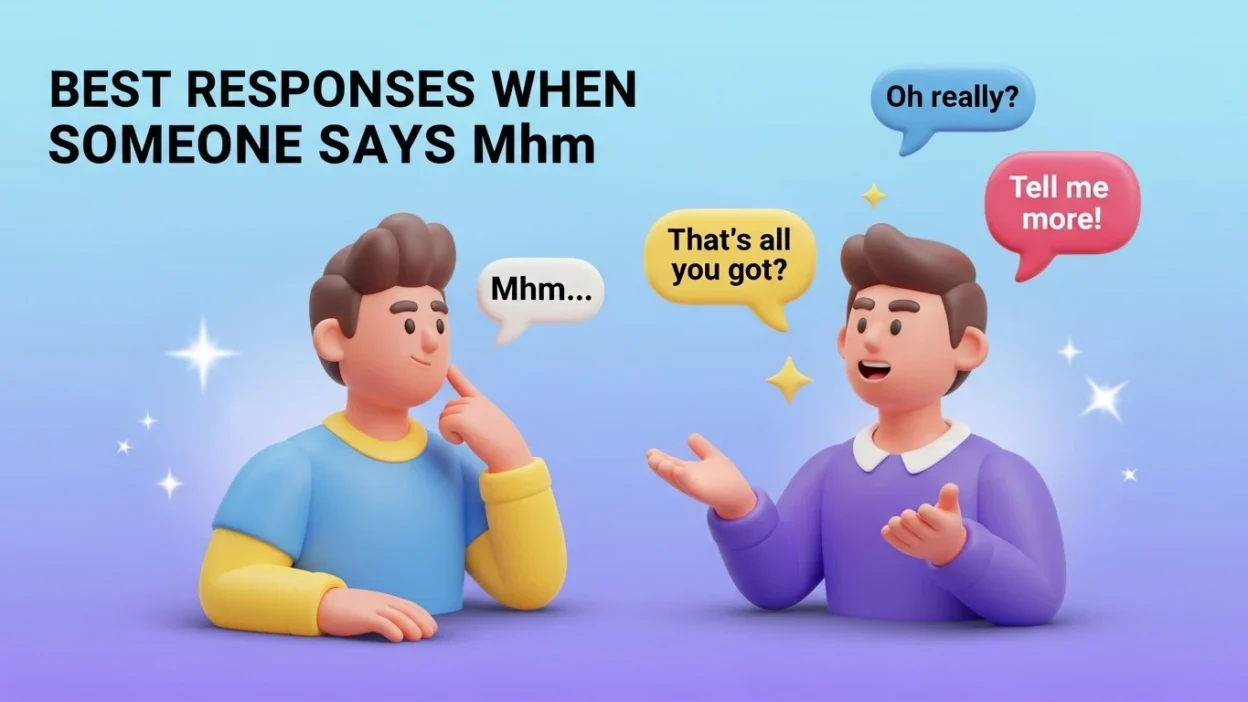
When someone replies with “mhm”, it can feel a little confusing. Sometimes it means they agree, sometimes they are listening quietly, and other times it sounds like they are not very interested.
Because of that, many people wonder what the best responses when someone says mhm actually are.
The good news is that there are many creative, friendly, and even funny ways to reply. Whether you want to keep the conversation going, add humor, or gently check if the other person understands, the right response can make communication smoother.
In this guide, you will discover clever replies, conversation tips, and practical examples that help you respond confidently when someone simply says “mhm.”
1. Keep the Conversation Going
Best for: Casual chats where the other person seems quiet.
Alternative: Ask a follow-up question.
Examples:
“Got it! What do you think about it though?”
“So… mhm means yes or ‘tell me more’?”
Sometimes “mhm” just signals listening. A follow-up question keeps the dialogue alive.
2. Turn It Into a Light Joke
Best for: Friendly conversations.
Alternative: Playful teasing.
Examples:
“That’s the most mysterious mhm I’ve heard today.”
“Wow, such a powerful mhm!”
Humor quickly removes awkward silence.
3. Ask for Clarification
Best for: Important discussions.
Alternative: Direct confirmation.
Examples:
“Does that mean you agree?”
“Should I take that mhm as a yes?”
Clear communication prevents misunderstandings.
4. Respond With Enthusiasm
Best for: Energizing quiet chats.
Alternative: Positive energy reply.
Examples:
“Mhm energy detected!”
“Nice! I’ll take that as approval.”
Energy often encourages more engagement.
5. Mirror the Tone
Best for: Casual texting.
Alternative: Matching response style.
Examples:
“Mhm right back at you.”
“Mhm squad!”
Mirroring tone builds rapport.
6. Continue the Story
Best for: Storytelling moments.
Alternative: Narrative continuation.
Examples:
“Exactly! And then guess what happened next?”
“Right! That’s when things got interesting.”
This keeps listeners engaged.
7. Confirm Agreement
Best for: Work or school conversations.
Alternative: Confirmation response.
Examples:
“Great, glad we’re on the same page.”
“Perfect, I’ll move forward then.”
Professional settings benefit from clarity.
8. Ask Their Opinion
Best for: Encouraging participation.
Alternative: Opinion request.
Examples:
“What would you do in that situation?”
“How do you feel about it?”
This invites deeper conversation.
9. Playfully Call It Out
Best for: Close friends.
Alternative: Friendly teasing.
Examples:
“That mhm sounded suspicious.”
“Are you actually listening or just mhm-ing me?”
Light teasing makes chats lively.
10. Use Curiosity
Best for: Engaging discussions.
Alternative: Curious follow-up.
Examples:
“Interesting mhm… care to elaborate?”
“That sounds like you have thoughts.”
Curiosity encourages longer replies.
11. Add Humor
Best for: Text messages.
Alternative: Meme-style response.
Examples:
“That mhm deserves an award.”
“Breaking news: legendary mhm spotted.”
Funny responses lighten the mood.
12. Respond With Positivity
Best for: Friendly communication.
Alternative: Encouraging tone.
Examples:
“Glad you’re with me!”
“Awesome, I appreciate that.”
Positive replies keep conversations smooth.
13. Ask If They Agree
Best for: Debates or opinions.
Alternative: Confirmation question.
Examples:
“So you agree then?”
“That mhm sounds like approval.”
Agreement matters in discussions.
14. Keep It Casual
Best for: Relaxed chats.
Alternative: Simple acknowledgment.
Examples:
“Cool!”
“Nice.”
Sometimes simplicity works best.
15. Encourage a Longer Reply
Best for: Quiet conversations.
Alternative: Prompting response.
Examples:
“Tell me more about that.”
“What’s your take?”
Encouragement helps expand dialogue.
16. Respond With Curiosity
Best for: Deep conversations.
Alternative: Thoughtful follow-up.
Examples:
“Interesting reaction.”
“What made you say mhm?”
Curiosity builds meaningful talks.
17. Turn It Into Playful Banter
Best for: Friends or partners.
Alternative: Light teasing.
Examples:
“Your mhm says a lot without saying much.”
“That mhm sounds dramatic.”
Banter keeps things entertaining.
18. Show Appreciation
Best for: When someone listens patiently.
Alternative: Grateful response.
Examples:
“Thanks for hearing me out.”
“I appreciate you listening.”
Acknowledging attention strengthens relationships.
19. Respond With Confidence
Best for: Presenting ideas.
Alternative: Confident reply.
Examples:
“Great, I’m glad that makes sense.”
“Perfect, we’re aligned.”
Confidence reassures others.
20. Ask a Follow-Up Question
Best for: Avoiding awkward silence.
Alternative: Conversation extender.
Examples:
“What do you think though?”
“Would you try it?”
Questions spark engagement.
21. Add Playful Curiosity
Best for: Friendly texting.
Alternative: Curious joke.
Examples:
“That mhm sounded mysterious.”
“I sense hidden opinions.”
Mystery makes conversations fun.
22. Turn It Into a Compliment
Best for: Positive interactions.
Alternative: Friendly appreciation.
Examples:
“I like that thoughtful mhm.”
“That’s a wise mhm.”
Compliments improve mood.
23. Respond With Humor
Best for: Social media chats.
Alternative: Funny comeback.
Examples:
“That mhm just solved everything.”
“Legendary response.”
Humor boosts engagement.
24. Keep It Friendly
Best for: Everyday conversation.
Alternative: Warm reply.
Examples:
“Glad you understand.”
“Nice, thanks!”
Friendliness maintains connection.
25. Continue With Details
Best for: Explaining something.
Alternative: Elaborate further.
Examples:
“Right, and that’s why it matters.”
“Exactly, here’s the next part.”
More details help clarity.
26. Add a Playful Question
Best for: Casual chats.
Alternative: Fun curiosity.
Examples:
“That a yes-mhm or maybe-mhm?”
“What level mhm is that?”
Fun questions encourage responses.
27. Keep It Light
Best for: Relaxed talks.
Alternative: Chill response.
Examples:
“Alright then!”
“Sounds good.”
Light replies keep things easy.
28. Encourage Engagement
Best for: Group discussions.
Alternative: Invite feedback.
Examples:
“What’s your opinion?”
“Would you agree?”
Engagement improves interaction.
29. Respond Playfully
Best for: Friends and texting.
Alternative: Playful tease.
Examples:
“That mhm had attitude.”
“I felt that mhm.”
Playfulness makes chats lively.
30. End the Conversation Smoothly
Best for: Wrapping up chats.
Alternative: Polite closing.
Examples:
“Alright, talk later!”
“Good chat!”
Ending gracefully leaves a good impression.
Conclusion
When someone says “mhm,” the meaning can vary depending on tone, context, and the relationship between speakers. Sometimes it signals agreement, sometimes it shows listening, and occasionally it simply fills a pause in conversation. Because of that, knowing the best responses when someone says mhm helps you avoid awkward moments and keeps communication flowing naturally.
The key is to stay relaxed, curious, and friendly. A playful joke, thoughtful question, or simple acknowledgment can turn a quiet response into a lively conversation. By using these creative replies, you can maintain engagement, build stronger connections, and make everyday chats more enjoyable.
FAQs
What does “mhm” usually mean in conversation?
“Mhm” typically indicates agreement, acknowledgment, or that someone is listening. However, tone and context determine the exact meaning.
Is “mhm” considered rude?
Not usually. Many people use it as a casual listening signal, though it can feel dismissive if overused.
How should I respond to “mhm” in texting?
You can ask a follow-up question, add humor, or simply continue the conversation depending on the situation.
Why do people reply with “mhm” instead of words?
Some people use it as a quick acknowledgment while listening or multitasking.
Can “mhm” mean disagreement?
Sometimes. If the tone sounds hesitant or sarcastic, it might signal uncertainty rather than agreement.

Axel Brady is an American author and independent blogger known for building his own digital publishing platform.
He focuses on writing about motivation, lifestyle design, and online business strategies.
Through his work, he aims to inspire readers to create, grow, and succeed in the digital world.