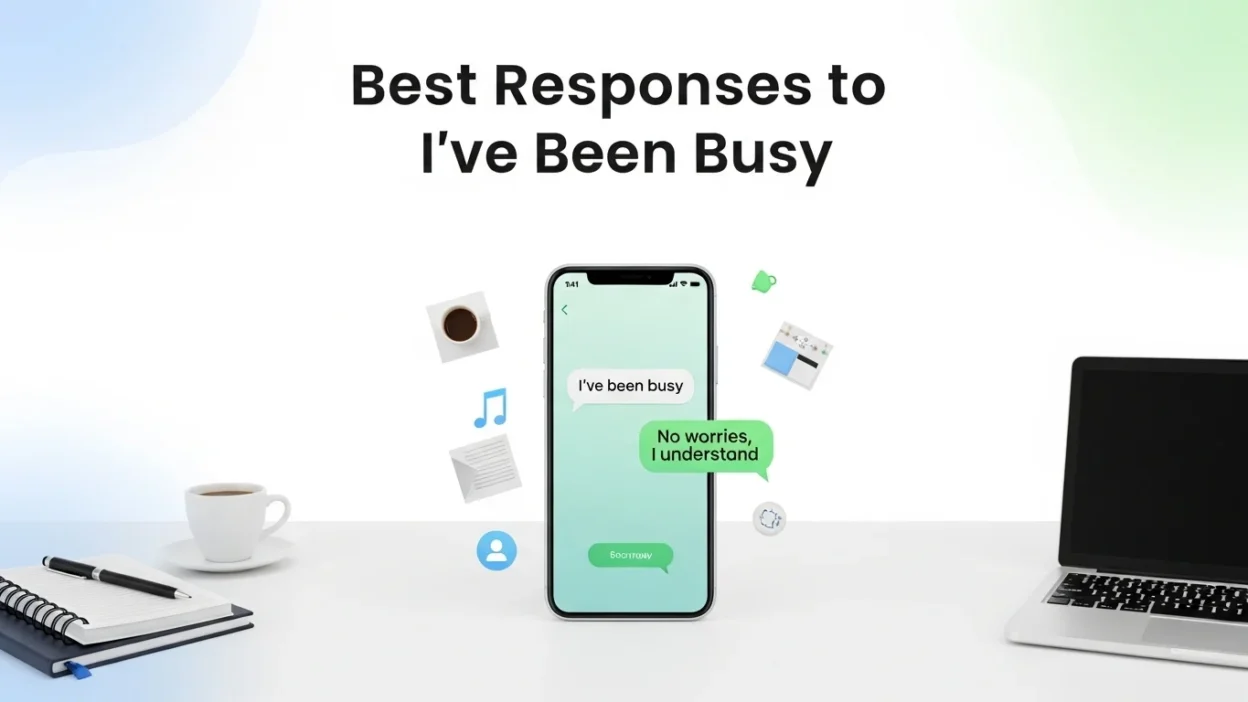
When someone says “I’ve been busy,” it can mean many things. Sometimes it’s a genuine explanation for delayed messages or missed plans.
Other times, it might simply be a polite way of saying they haven’t had time to talk. Knowing the best responses to “I’ve been busy” can help you keep the conversation positive, respectful, and engaging.
Instead of reacting negatively, a thoughtful reply can show understanding while keeping communication open. Whether you want to sound supportive, curious, friendly, or even a little humorous, there are many ways to respond naturally. In this guide, you’ll find helpful and polite responses to “I’ve been busy” that work for friends, coworkers, partners, and casual conversations.
1. Show Understanding
Best for: Friendly conversations
Alternative: Supportive reply
Examples:
“I understand, life gets busy sometimes.”
“No worries, I hope everything is going well.”
Acknowledging their situation keeps the conversation positive.
2. Express Patience
Best for: Waiting for replies
Alternative: Calm response
Examples:
“That’s okay, take your time.”
“I figured you were busy.”
Patience shows respect for their schedule.
3. Ask How They’ve Been
Best for: Continuing conversation
Alternative: Friendly follow-up
Examples:
“Hope everything’s been good with you.”
“How have things been lately?”
This keeps the conversation flowing.
4. Keep It Light
Best for: Casual chats
Alternative: Friendly tone
Examples:
“No worries, it happens!”
“Busy days are normal.”
A relaxed response prevents awkwardness.
5. Show Interest
Best for: Curious conversations
Alternative: Engaging reply
Examples:
“What have you been busy with?”
“Anything exciting keeping you busy?”
Curiosity can open new topics.
6. Be Supportive
Best for: Stressful schedules
Alternative: Encouraging reply
Examples:
“Hope it hasn’t been too stressful.”
“Hope everything’s going smoothly.”
Supportive responses show empathy.
7. Use Humor
Best for: Friends
Alternative: Playful reply
Examples:
“Busy saving the world?”
“Busy being awesome, I assume.”
Humor keeps the mood light.
8. Offer Help
Best for: Close friends or coworkers
Alternative: Helpful message
Examples:
“Let me know if I can help.”
“Hope I can make things easier somehow.”
Offering help shows kindness.
9. Be Understanding
Best for: Professional conversations
Alternative: Respectful reply
Examples:
“I completely understand.”
“Sounds like you’ve had a lot going on.”
Professional responses maintain respect.
10. Encourage Balance
Best for: Overworked friends
Alternative: Caring reminder
Examples:
“Don’t forget to take breaks.”
“Make sure you get some rest too.”
Encouragement shows care.
11. Keep the Conversation Going
Best for: Text conversations
Alternative: Friendly follow-up
Examples:
“Glad to hear from you.”
“Nice to catch up again.”
Keeps communication active.
12. Show Appreciation
Best for: Someone who finally replied
Alternative: Thankful response
Examples:
“Thanks for getting back to me.”
“I appreciate the update.”
Gratitude creates positivity.
13. Be Curious
Best for: Catching up
Alternative: Conversation starter
Examples:
“What’s been keeping you busy?”
“Tell me what you’ve been working on.”
Curiosity helps reconnect.
14. Respond Calmly
Best for: Neutral tone
Alternative: Balanced reply
Examples:
“Got it, busy days happen.”
“I understand completely.”
Calm responses avoid tension.
15. Encourage Relaxation
Best for: Busy friends
Alternative: Caring reply
Examples:
“Hope you get some time to relax.”
“Make sure you take it easy.”
Shows thoughtful concern.
16. Show Empathy
Best for: Stressful situations
Alternative: Understanding message
Examples:
“That sounds like a lot.”
“Hope things calm down soon.”
Empathy builds connection.
17. Be Friendly
Best for: Casual chats
Alternative: Warm reply
Examples:
“Good to hear from you.”
“Hope your week has been good.”
Friendly replies keep things positive.
18. Encourage Updates
Best for: Staying connected
Alternative: Friendly request
Examples:
“Keep me posted!”
“Let me know how things go.”
Encourages future conversation.
19. Add Positivity
Best for: Encouragement
Alternative: Positive reply
Examples:
“Hope it’s all going well.”
“Sounds productive!”
Positive language helps tone.
20. Show Respect
Best for: Professional settings
Alternative: Polite message
Examples:
“I respect how busy things can get.”
“Thanks for letting me know.”
Respectful tone builds trust.
21. Be Playful
Best for: Friends
Alternative: Funny reply
Examples:
“Busy conquering the world?”
“Busy with secret missions?”
Playful humor adds fun.
22. Acknowledge Effort
Best for: Hard workers
Alternative: Appreciation message
Examples:
“Sounds like you’ve been working hard.”
“That must take a lot of effort.”
Acknowledging effort shows respect.
23. Offer Encouragement
Best for: Motivation
Alternative: Supportive reply
Examples:
“Keep up the great work.”
“You’re doing amazing.”
Encouragement inspires confidence.
24. Be Relaxed
Best for: Casual conversations
Alternative: Easygoing reply
Examples:
“No stress at all.”
“It happens to everyone.”
A relaxed tone keeps things comfortable.
25. Ask About Their Work
Best for: Curious tone
Alternative: Follow-up question
Examples:
“What projects are you working on?”
“Is work keeping you busy?”
Shows genuine interest.
26. Share Positivity
Best for: Friendly tone
Alternative: Cheerful message
Examples:
“Hope it’s all good busy!”
“Busy can be a good thing.”
Positive framing helps mood.
27. Keep It Short
Best for: Quick replies
Alternative: Simple response
Examples:
“Totally understand.”
“No worries.”
Short replies are often best.
28. Encourage Catching Up
Best for: Friends
Alternative: Reconnect message
Examples:
“We should catch up soon.”
“Let’s talk when you’re free.”
Helps maintain relationships.
29. Be Understanding and Kind
Best for: Close relationships
Alternative: Gentle reply
Examples:
“I get it, life gets hectic.”
“Take your time.”
Kindness strengthens bonds.
30. End With Positivity
Best for: Friendly ending
Alternative: Warm message
Examples:
“Hope things slow down soon.”
“Looking forward to chatting again.”
Positive endings leave a good impression.
Conclusion
Knowing the best responses to “I’ve been busy” can help you handle conversations with understanding and confidence. Whether you choose a supportive reply, a curious question, or a lighthearted joke, the key is keeping your response respectful and friendly.
When someone explains they’ve been busy, responding with empathy and positivity helps maintain strong communication. With these responses, you can keep conversations comfortable, engaging, and meaningful while showing respect for someone’s time and responsibilities.
FAQs
What does “I’ve been busy” usually mean?
It usually means someone has been occupied with work, responsibilities, or personal matters and hasn’t had much time to communicate.
How should you respond politely to “I’ve been busy”?
A polite reply could be “I understand, hope everything is going well.”
Is “No worries” a good response?
Yes, it’s a casual and friendly response that shows you’re understanding.
Should you ask what they were busy with?
You can ask politely if you want to continue the conversation, such as “What’s been keeping you busy?”
Is it okay to respond with humor?
Yes, with friends humor can lighten the mood and make the conversation more relaxed.

Anthony George is an independent American author and blogger known for creating and managing his self-founded blogging platform.
He writes about personal growth, digital creativity, and modern online entrepreneurship.
Through his blog, he shares practical insights and experiences to inspire aspiring writers and content creators.