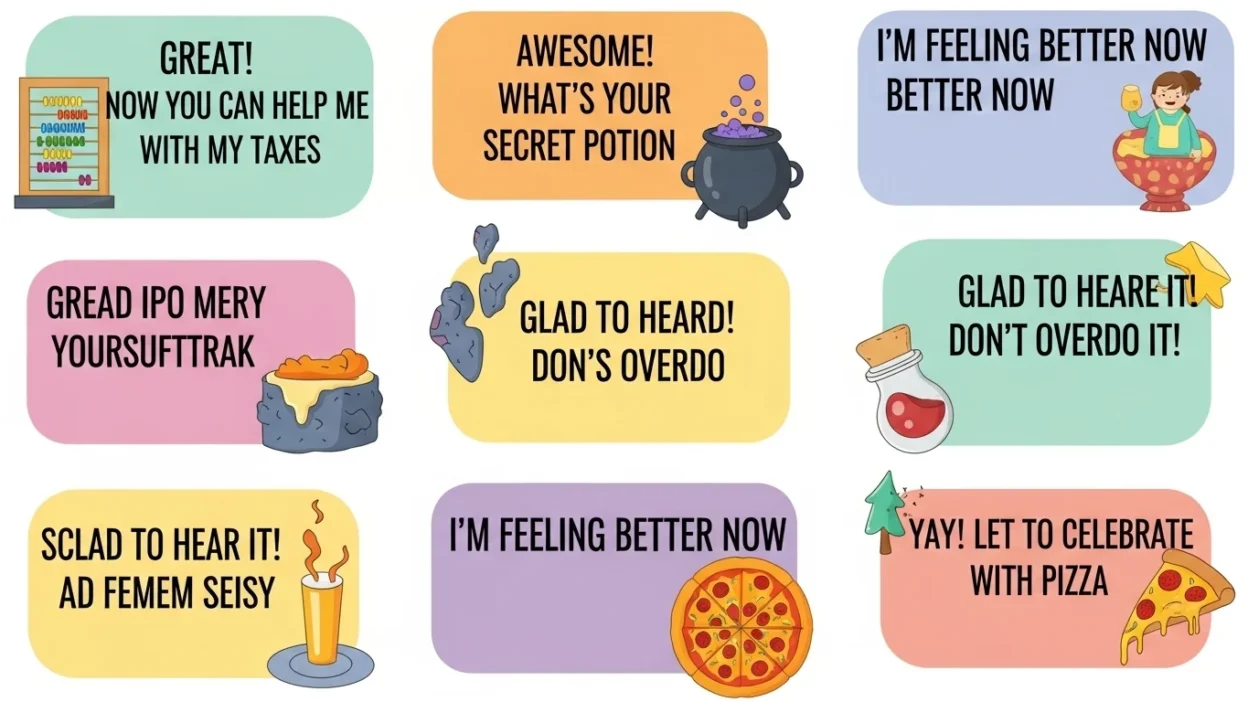
When someone tells you “I’m feeling better now,” it often means they’ve gone through a difficult moment—whether it was illness, stress, emotional struggles, or a tough day.
Knowing the best replies to “I’m feeling better now” can help you respond with empathy, kindness, and encouragement. A thoughtful response shows that you genuinely care about their well-being and are happy they’re recovering.
Sometimes it can be hard to know what to say in these situations. You want to be supportive without sounding awkward or overly formal. In this guide, you’ll discover warm replies, comforting responses, and thoughtful messages that help you express happiness, relief, and continued support when someone shares that they’re feeling better.
1. Express Genuine Happiness
Best for: Close friends and family
Alternative: Warm response
Examples:
“I’m really glad to hear that!”
“That’s such great news!”
Showing happiness lets them know you truly care.
2. Show Relief
Best for: Concerned conversations
Alternative: Reassuring reply
Examples:
“I’m relieved you’re feeling better.”
“That makes me feel better too.”
Relief shows how much you worried about them.
3. Offer Continued Support
Best for: Emotional situations
Alternative: Encouraging message
Examples:
“I’m always here if you need anything.”
“Let me know if there’s anything I can do.”
Support reminds them they’re not alone.
4. Celebrate Their Progress
Best for: Recovery moments
Alternative: Positive reply
Examples:
“That’s a big step forward.”
“I’m happy things are improving.”
Celebrating progress boosts positivity.
5. Encourage Self-Care
Best for: Health recovery
Alternative: Caring reminder
Examples:
“Make sure you keep taking care of yourself.”
“Don’t forget to get plenty of rest.”
Gentle reminders show concern.
6. Add a Friendly Tone
Best for: Casual conversations
Alternative: Lighthearted reply
Examples:
“Glad to hear you’re back to your usual self.”
“That’s awesome news!”
Friendly replies feel natural.
7. Acknowledge Their Strength
Best for: Emotional recovery
Alternative: Supportive message
Examples:
“You handled that really well.”
“You’re stronger than you think.”
Encouraging words boost confidence.
8. Keep the Conversation Going
Best for: Text chats
Alternative: Follow-up question
Examples:
“I’m glad you’re feeling better—what helped?”
“Anything fun planned now that you’re feeling good?”
Follow-ups show interest.
9. Share Positive Energy
Best for: Motivation
Alternative: Optimistic reply
Examples:
“That’s wonderful to hear!”
“Things are looking up!”
Positive language lifts spirits.
10. Offer Encouragement
Best for: Tough recoveries
Alternative: Motivating reply
Examples:
“Keep going—you’re doing great.”
“Every day will get even better.”
Encouragement supports healing.
11. Show Appreciation for the Update
Best for: Caring conversations
Alternative: Thankful reply
Examples:
“Thanks for letting me know.”
“I appreciate the update.”
Acknowledging the update feels thoughtful.
12. Express Gratitude
Best for: Emotional support moments
Alternative: Kind response
Examples:
“I’m grateful you’re feeling better.”
“That’s wonderful news.”
Gratitude creates warmth.
13. Celebrate Small Wins
Best for: Gradual recovery
Alternative: Motivating message
Examples:
“Every step forward counts.”
“That’s a great improvement.”
Small victories matter.
14. Offer a Compliment
Best for: Encouragement
Alternative: Positive feedback
Examples:
“You handled that situation well.”
“I admire your resilience.”
Compliments strengthen confidence.
15. Add Gentle Humor
Best for: Friends
Alternative: Lighthearted joke
Examples:
“Glad the universe gave you a break!”
“Good—life’s better when you’re smiling.”
Humor can lift the mood.
16. Reinforce Positivity
Best for: Emotional support
Alternative: Encouraging reply
Examples:
“That’s a great sign.”
“Things are definitely improving.”
Positive reinforcement helps recovery.
17. Be Compassionate
Best for: Sensitive situations
Alternative: Caring response
Examples:
“I’m really happy you’re feeling better.”
“You deserve to feel good again.”
Compassion matters.
18. Encourage Future Positivity
Best for: Moving forward
Alternative: Motivational reply
Examples:
“Better days ahead!”
“Things will keep improving.”
Forward-looking messages inspire hope.
19. Ask If They Need Anything
Best for: Supportive relationships
Alternative: Helpful message
Examples:
“Do you need anything right now?”
“Let me know if I can help.”
Offering help is always kind.
20. Celebrate Recovery
Best for: Health recovery
Alternative: Positive reply
Examples:
“That’s fantastic news!”
“I’m glad you’re on the mend.”
Celebrating recovery feels uplifting.
21. Show Understanding
Best for: Emotional conversations
Alternative: Empathetic reply
Examples:
“I’m glad things are getting easier.”
“You’ve been through a lot.”
Understanding deepens connection.
22. Offer Encouraging Words
Best for: Motivation
Alternative: Supportive message
Examples:
“You’ve got this.”
“Keep moving forward.”
Encouraging words motivate people.
23. Share Your Happiness
Best for: Close relationships
Alternative: Warm response
Examples:
“That makes me really happy.”
“I’m so glad to hear that.”
Sharing happiness strengthens bonds.
24. Acknowledge the Hard Time
Best for: Empathy
Alternative: Understanding reply
Examples:
“You deserved some relief.”
“I’m glad things are improving.”
Recognizing the struggle matters.
25. Encourage Rest
Best for: Health recovery
Alternative: Caring advice
Examples:
“Take it easy for a while.”
“Give yourself time to fully recover.”
Rest reminders show care.
26. Celebrate Their Effort
Best for: Mental health recovery
Alternative: Supportive compliment
Examples:
“You’ve worked hard to get here.”
“You’ve handled everything well.”
Acknowledging effort feels validating.
27. Keep the Tone Positive
Best for: Friendly chats
Alternative: Cheerful reply
Examples:
“That’s great news!”
“I’m happy for you.”
Positive tone matters.
28. Encourage Enjoyment
Best for: After recovery
Alternative: Happy reply
Examples:
“Now you can enjoy life again.”
“Time to celebrate feeling better!”
Celebrating joy spreads positivity.
29. Express Warm Wishes
Best for: Kind conversations
Alternative: Gentle reply
Examples:
“Wishing you continued good health.”
“Hope you keep feeling better.”
Warm wishes feel thoughtful.
30. End With Encouragement
Best for: Final supportive reply
Alternative: Motivational message
Examples:
“Keep taking care of yourself.”
“Brighter days are ahead.”
Ending with encouragement leaves a positive impression.
Conclusion
Knowing the best replies to “I’m feeling better now” helps you respond with empathy, kindness, and genuine happiness. Whether the person recovered from illness, stress, or emotional challenges, a supportive message can make them feel valued and understood.
Sometimes the simplest responses—like expressing relief, encouragement, or gratitude—can mean the most. By choosing thoughtful words, you strengthen your relationships and show that you truly care about the people in your life.
FAQs
What is the best reply to “I’m feeling better now”?
A simple response like “I’m really glad to hear that!” or “That’s wonderful news!” is warm and supportive.
Should you ask follow-up questions?
Yes. Asking something like “What helped you feel better?” keeps the conversation caring and engaging.
Is humor appropriate in this situation?
Light humor can work with close friends, but it’s best to keep the tone supportive and respectful.
How do you respond if someone recovered from illness?
You can say “I’m glad you’re on the mend—take care of yourself.”
Why is empathy important when replying?
Empathy shows that you truly care about the person’s well-being and value their recovery.

Anthony George is an independent American author and blogger known for creating and managing his self-founded blogging platform.
He writes about personal growth, digital creativity, and modern online entrepreneurship.
Through his blog, he shares practical insights and experiences to inspire aspiring writers and content creators.