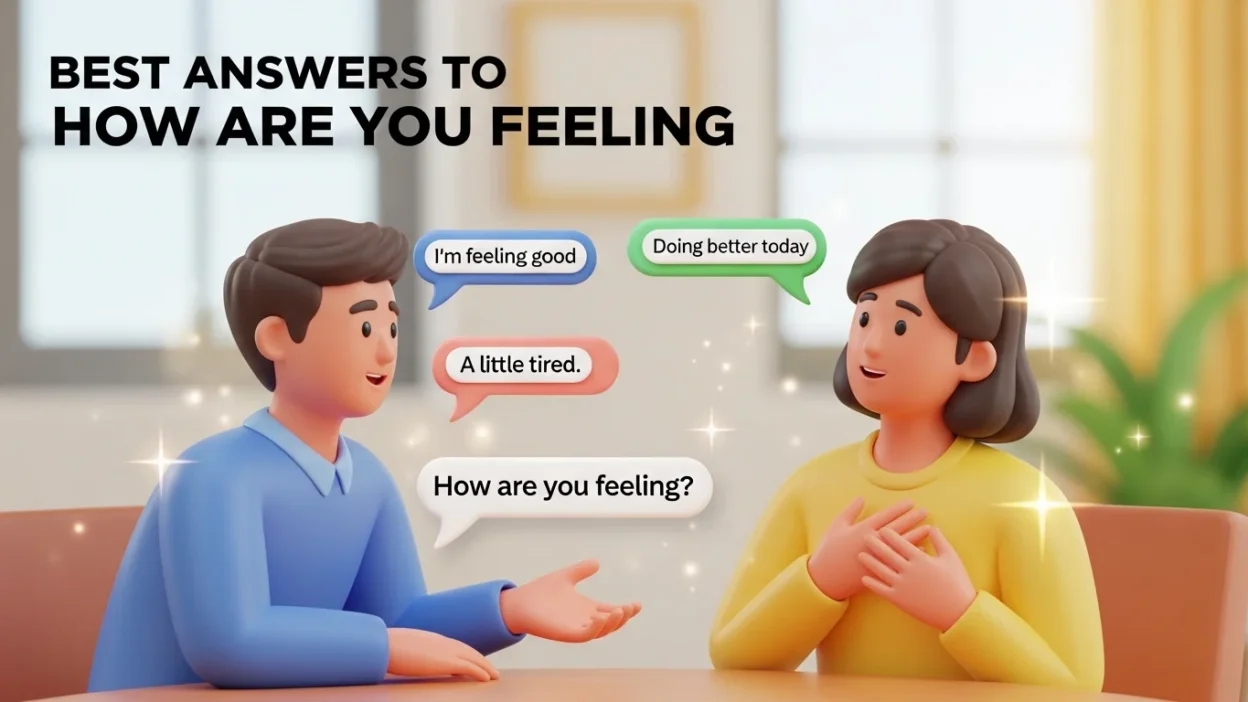
People often ask “How are you feeling?” to show care, concern, or simple curiosity. Sometimes it happens in casual conversations, while other times it appears during important moments when someone genuinely wants to understand your emotional or physical state.
Because the question is so common, knowing the best answers to How Are You Feeling can help you respond naturally and keep conversations comfortable.
Your response may depend on the situation, your mood, and who is asking. You might want to keep things light, share something honest, or even add humor.
In this guide, you will discover thoughtful, friendly, and creative responses that fit different situations. These answers will help you communicate clearly while keeping your conversations warm and engaging.
1. Simple Positive Reply
Best for: Casual conversations.
Alternative: “I’m doing great.”
Examples:
“I’m feeling pretty good today.”
“Honestly, I’m feeling great!”
A simple positive response works well in everyday chats.
2. Honest but Short
Best for: Quick updates.
Alternative: “I’m okay.”
Examples:
“I’m feeling alright today.”
“Doing okay, thanks for asking.”
Short honest answers keep things natural.
3. Enthusiastic Response
Best for: Friendly conversations.
Alternative: Energetic reply.
Examples:
“I’m feeling amazing today!”
“Really good, actually!”
Enthusiasm shows positivity and energy.
4. Light and Casual
Best for: Relaxed chats.
Alternative: Easygoing answer.
Examples:
“Pretty good, can’t complain.”
“I’m doing just fine.”
Casual replies keep things comfortable.
5. Grateful Reply
Best for: When someone shows care.
Alternative: Appreciative response.
Examples:
“I’m feeling good, thanks for asking.”
“Better now that you asked!”
Gratitude strengthens connections.
6. Honest Emotional Response
Best for: Meaningful conversations.
Alternative: Open response.
Examples:
“I’m feeling a bit overwhelmed today.”
“I’m doing okay, just a little tired.”
Honesty builds trust.
7. Funny Response
Best for: Friends.
Alternative: Humorous answer.
Examples:
“I feel like I need coffee.”
“Like it’s Monday again!”
Humor keeps the conversation light.
8. Optimistic Reply
Best for: Positive mindset.
Alternative: Hopeful response.
Examples:
“I’m feeling hopeful today.”
“Pretty good and staying positive.”
Optimism spreads good vibes.
9. Reflective Response
Best for: Deeper discussions.
Alternative: Thoughtful reply.
Examples:
“I’m feeling thoughtful today.”
“I’m processing a lot but doing okay.”
Reflection invites meaningful conversation.
10. Energetic Response
Best for: Social settings.
Alternative: High-energy answer.
Examples:
“I’m feeling full of energy.”
“Ready to take on the day!”
Energy creates enthusiasm.
11. Calm and Peaceful
Best for: Relaxed moods.
Alternative: Peaceful reply.
Examples:
“I’m feeling calm today.”
“Pretty relaxed actually.”
Calm responses sound balanced.
12. Playful Answer
Best for: Friendly chats.
Alternative: Fun response.
Examples:
“I’m feeling like pizza tonight.”
“Like I deserve a nap.”
Playful replies add personality.
13. Motivated Reply
Best for: Work or goals.
Alternative: Determined response.
Examples:
“I’m feeling motivated.”
“Ready to get things done.”
Motivation shows confidence.
14. Curious Mood
Best for: Creative discussions.
Alternative: Curious response.
Examples:
“I’m feeling curious today.”
“Ready to learn something new.”
Curiosity sparks interesting talks.
15. Balanced Reply
Best for: Honest conversations.
Alternative: Neutral answer.
Examples:
“I’m somewhere in the middle today.”
“Not bad, not amazing.”
Balance keeps things realistic.
16. Slightly Tired
Best for: Busy days.
Alternative: Honest fatigue reply.
Examples:
“I’m a bit tired but okay.”
“Running low on energy today.”
Relatable answers feel genuine.
17. Appreciative Response
Best for: Caring conversations.
Alternative: Thankful answer.
Examples:
“I’m feeling better now.”
“Thanks for checking in.”
Appreciation builds warmth.
18. Cheerful Reply
Best for: Positive interactions.
Alternative: Happy response.
Examples:
“I’m feeling cheerful today.”
“Pretty happy actually!”
Cheerfulness brightens conversations.
19. Confident Answer
Best for: Professional settings.
Alternative: Strong reply.
Examples:
“I’m feeling confident about things.”
“Doing well and staying focused.”
Confidence inspires trust.
20. Relaxed Mood
Best for: Weekend chats.
Alternative: Chill response.
Examples:
“I’m feeling relaxed today.”
“Taking it easy.”
Relaxed responses feel comfortable.
21. Honest Struggle
Best for: Close friends.
Alternative: Vulnerable response.
Examples:
“I’m having a tough day.”
“Not my best day, honestly.”
Sharing struggles builds support.
22. Light Humor
Best for: Casual chats.
Alternative: Funny comeback.
Examples:
“I’m surviving.”
“Still alive!”
Humor reduces tension.
23. Excited Response
Best for: Good news moments.
Alternative: Excited answer.
Examples:
“I’m feeling excited today!”
“Really pumped about things.”
Excitement spreads positivity.
24. Focused Reply
Best for: Work discussions.
Alternative: Productive response.
Examples:
“I’m feeling focused.”
“Ready to work.”
Focus shows dedication.
25. Thoughtful Response
Best for: Deep conversations.
Alternative: Reflective answer.
Examples:
“I’m thinking about a lot lately.”
“Feeling reflective today.”
Thoughtful replies encourage connection.
26. Appreciating the Moment
Best for: Mindfulness conversations.
Alternative: Present-focused reply.
Examples:
“I’m feeling grateful today.”
“Just enjoying the moment.”
Mindful responses feel calming.
27. Encouraging Reply
Best for: Positive conversations.
Alternative: Uplifting answer.
Examples:
“I’m doing well and staying positive.”
“Feeling good and hopeful.”
Encouragement spreads optimism.
28. Curious and Playful
Best for: Friendly chats.
Alternative: Playful curiosity.
Examples:
“I’m feeling adventurous today.”
“Ready for something fun.”
Curiosity keeps things lively.
29. Honest and Calm
Best for: Genuine conversations.
Alternative: Balanced reply.
Examples:
“I’m feeling okay overall.”
“Just taking things one step at a time.”
Calm honesty feels authentic.
30. Ending With Positivity
Best for: Friendly conversations.
Alternative: Positive wrap-up.
Examples:
“I’m feeling good today.”
“Better than yesterday!”
Ending with positivity keeps conversations uplifting.
Conclusion
When someone asks “How are you feeling?”, your response can shape the tone of the entire conversation. Whether you choose a simple answer, a thoughtful reflection, or a humorous reply, the best answers to How Are You Feeling help you express yourself clearly and naturally.
By choosing responses that match your mood and situation, you can build stronger connections, encourage open conversations, and share genuine moments with others. Sometimes a small honest answer is all it takes to make a meaningful interaction.
FAQs
What is the best response to “How are you feeling?”
A simple response like “I’m feeling good, thanks for asking” works well in most situations.
Should I always answer honestly?
Honesty helps build trust, but you can keep answers simple if you prefer privacy.
Can I reply with humor?
Yes, funny responses work well with friends and casual conversations.
What is a professional answer to “How are you feeling?”
A polite response like “I’m doing well today, thank you” works best in professional settings.
How can I make my answer more meaningful?
Add a small detail about your mood or gratitude to make the response more personal.

Dakota Leonel is an American independent author and digital blogger who founded his own online writing platform.
He writes about self-improvement, modern lifestyle, and building income through creative content.
His work encourages readers to develop discipline, purpose, and financial independence in the digital age.